Echoes from the Volcano:
The Resilience and Revival of Nahuat in El Salvador
By: Prof. E. A. Aguilar Ramirez – CUU English/Spanish Language Center
In the western highlands of El Salvador, where volcanoes loom over coffee fields and ancient trails, the Nahuat language—also known as Nawat or Pipil—clings to life. Once the dominant tongue of thriving city-states, it is today the country’s sole surviving Indigenous language, spoken fluently by only a small circle of elders yet echoing in the voices of hundreds of children and young learners. This is the story of the Nahuat Pipil people: migrants who built empires, survivors of conquest and massacre, and a community now harnessing education, digital tools, and constitutional recognition to reclaim what was nearly erased. From the 10th-century migrations out of Mexico to today’s preschool immersion circles and online classrooms, Nahuat embodies both profound loss and stubborn hope.
Roots in the North: The Pipil Migration and Pre-Colonial World
The Nahuat people trace their origins to waves of Nahua-speaking migrants who left central Mexico between the 8th and 11th centuries CE, likely connected to the Toltec civilization of Tula. Traveling south along the Gulf Coast, across the Isthmus of Tehuantepec, and down the Pacific plain, they settled in what is now western and central El Salvador, founding the powerful city-state of Cuzcatlán (or Kūskatan). They encountered and sometimes integrated with earlier groups like the Lenca in the east and Maya-related peoples such as the Poqomam and Ch’orti’. Archaeological and linguistic evidence shows these newcomers brought Uto-Aztecan traditions, maize agriculture, and a sophisticated social organization centered on noble lineages—pipiltin, from which the Spanish-derived exonym “Pipil” (meaning “nobles” or “children”) arose.
Nahuat, a southernmost branch of the Uto-Aztecan family and distinct from Mexican Nahuatl (lacking the “tl” sound and preserving older forms), became a regional lingua franca. It is polysynthetic and agglutinative: single words can form entire sentences by stacking roots while preserving their original meanings. Place names across El Salvador—Izalco, Nahuizalco, Sonsonate—still bear its imprint. Before Spanish arrival in 1524, Cuzcatlán resisted fiercely; the Battle of Acajutla saw Pipil forces clash with Pedro de Alvarado’s conquistadors. Colonization brought disease, forced labor, and evangelization, yet Nahuat endured in rural communities alongside Lenca and other tongues. By the 18th century, it remained vibrant enough for Spanish chroniclers to note its use from Guatemala’s Pacific coast to parts of Nicaragua.
Centuries of Dispossession and the Shadow of 1932
Independence from Spain in 1821 brought little relief. Liberal reforms privatized communal Indigenous lands, fueling coffee barons who seized territory for export plantations. Pipil communities in Sonsonate and Ahuachapán faced debt peonage and cultural suppression. Uprisings erupted periodically, but none matched the scale of January 1932.
Known as La Matanza (“The Massacre”), this episode remains the darkest chapter in modern Salvadoran history. Amid the Great Depression, plummeting coffee prices, and electoral fraud under dictator Maximiliano Hernández Martínez, peasants—many Pipil—rose in western towns like Izalco, Nahuizalco, Juayúa, and Tacuba. Demands focused on land, wages, and dignity. The government labeled the revolt “communist” and unleashed the army and civilian militias. Between 10,000 and 30,000 people, overwhelmingly Indigenous Pipil peasants and non-combatants, were slaughtered in days. Mass graves filled with bodies; survivors described lines of people forced to dig their own tombs before machine-gun fire. The repression was explicitly ethnocidal: Indigenous dress, language, and customs were banned as markers of subversion. Speaking Nahuat in public became a death sentence.
The trauma was total. Families hid their heritage. Mothers instructed children never to speak the “Indian tongue.” Nahuat retreated into private homes, spoken mostly by women tending households while men worked Spanish-only fields. By the late 20th century, intergenerational transmission had nearly ceased. UNESCO’s 2008 Atlas of Endangered Languages classified it as critically endangered, with perhaps 200 fluent elders remaining—mostly in isolated pockets like Santo Domingo de Guzmán (known in Nahuat as Witzapan, or “River of Thorns”). Other Indigenous languages, Lenca and Cacaopera, had already vanished.
A Constitutional Dawn and the Long Road to Recognition
For decades, the Salvadoran state denied Indigenous existence, promoting a myth of homogeneous mestizo identity. Pipil communities survived through quiet resistance: secret ceremonies honoring the 20 nahuales (sacred day-signs), maize rituals tied to the 260-day calendar, and oral histories linking the people to the volcano’s protective spirits. A turning point came in 2014 with a constitutional reform (Article 63) officially recognizing Indigenous peoples and mandating policies to preserve their ethnic, cultural, and linguistic identity. The Nahuat Language Day was established, and intercultural education gained tentative footholds. Yet implementation lagged, and many elders still lived in poverty, their knowledge at risk of dying with them.
Seeds of Revival: From Cunas to Classrooms and Screens
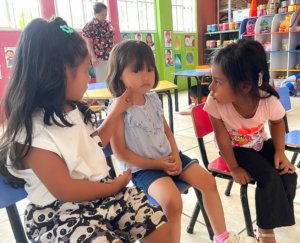
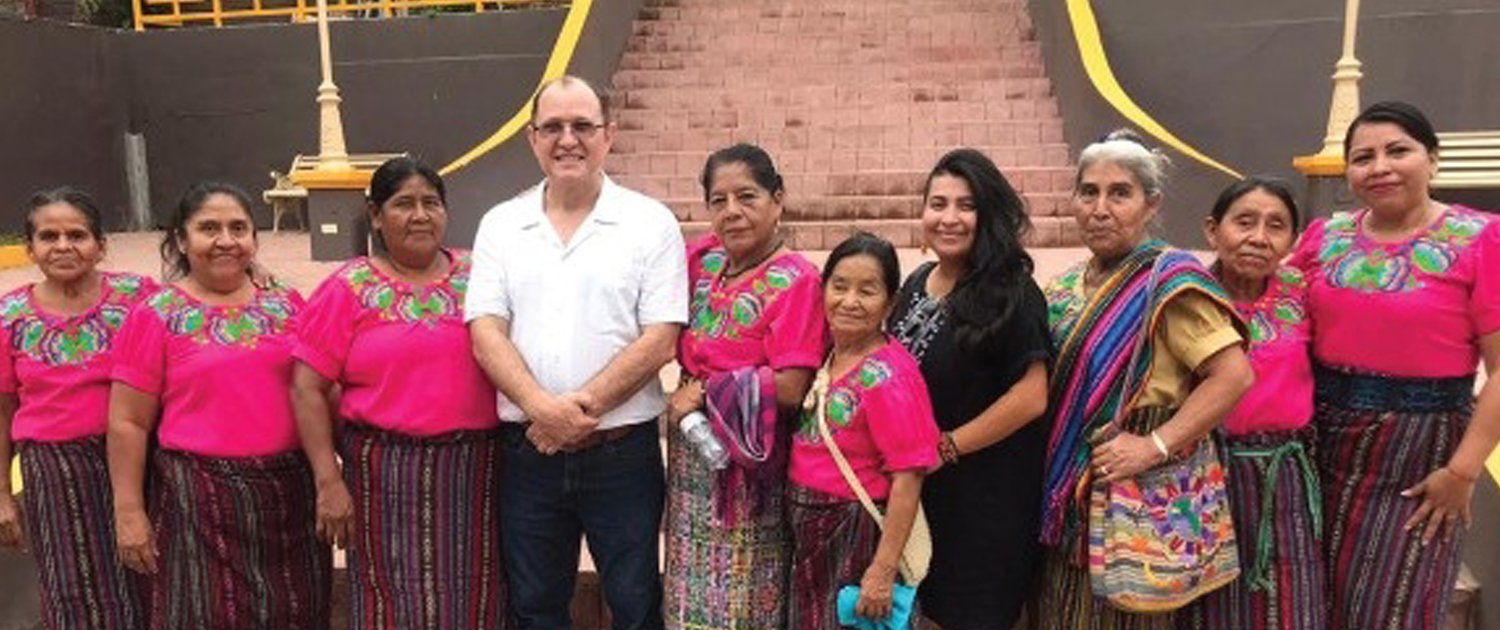
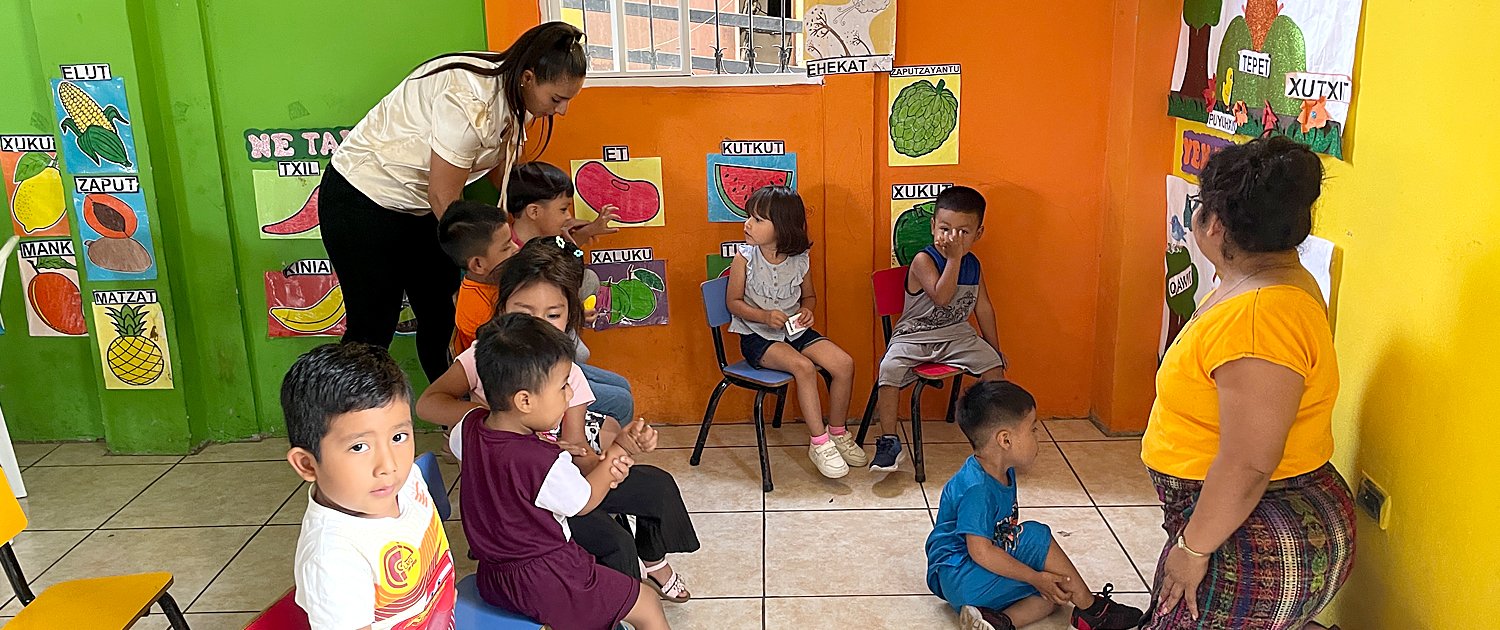
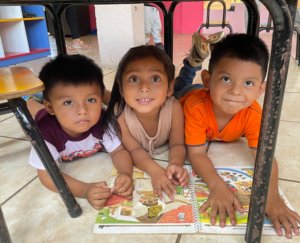
The revitalization began in earnest in the early 2000s through community and academic efforts, largely driven by Dr. Jorge Ernesto Lemus, director of research at Universidad Don Bosco and recipient of the National Culture Prize in 2010. The flagship initiative was Cuna Náhuat, a preschool immersion program launched in 2010 in Santo Domingo de Guzmán by Universidad Don Bosco under his leadership, with support from UNICEF, the Basque cooperative El Salvador Elkartasuna, and local municipalities. Elder women —nanzin tamatxtiani— served as “mother-teachers,” immersing children aged 3 to 5 in Nahuat-only environments through songs, games, cooking, and daily life. The program expanded to Santa Catarina Masahuat and Nahuizalco, serving more than 100 children across three sites by the early 2020s and training dozens of teachers. Parents reported that their toddlers were asking for water or food in Nahuat at home, sparking family interest in basic vocabulary. By ages 7 or 8, the children had internalized the language as part of their identity.
Complementary projects included the Intercultural Bilingual Education pilots in Sonsonate schools and the Iniciativa para la Recuperación del Idioma Náhuat (IRIN), which produced materials and trained instructors. Digital activism exploded. Teacher Héctor Martínez Flores, who learned Nahuat as an adult, launched Timumachtikan Nawat (“Let’s Learn Nahuat”), a YouTube channel offering lessons, memes, film dubs, and conversations with elders. In 2020, young activists Jonathan and Efraín joined him to found Ne Ichan Sefoura (“The House of Sefoura”), awarding over 700 scholarships for online courses and creating the first dictionary authored by a native speaker. Storybooks, a Living Dictionary app, and even a Nawat Wikipedia edition emerged. These tools reached thousands beyond western El Salvador, including diaspora communities.
By the 2024 national census, 1,135 people reported speaking Nahuat—encompassing roughly 200 native elders and a growing cohort of “neo-speakers” and learners. The language now appears in primary schools in dozens of centers, and youth inventory oral traditions under UNESCO-supported projects. Ceremonies for maize, family, and the sacred calendar continue, linking language to ecological knowledge and respect for madre naturaleza.
Setbacks, Sustainability, and the Path Ahead
Progress has not been linear. In early 2023, the Ministry of Education abruptly closed the Cuna Náhuat programs, folding them into a broader “Nests of Linguistic Immersion” initiative under the Growing Together Law. Critics called it a violation of Indigenous educational rights, arguing the new model lacked the cultural depth and elder-led immersion that made the original successful. Funding remains precarious, dependent on shifting governments and international donors. Elders face illness and isolation; without sustained support, the chain of transmission could break again. Broader societal prejudice—viewing linguistic diversity as “backward”—persists in some quarters.
Yet the momentum is unmistakable. Constitutional recognition, digital reach, and a new generation’s pride have transformed Nahuat from a whispered hearth language into a living emblem of identity. Place names, everyday Salvadoran Spanish vocabulary (dozens of Nahuat loanwords), and cultural festivals keep its echoes alive. Community leaders emphasize that revitalization is not merely linguistic but ecological and spiritual: learning Nahuat reconnects people to sustainable farming, environmental stewardship, and the 13 cosmic energies of the calendar.
The volcano still watches. Inside its crater, according to Pipil cosmology, ancestral forces tend eternal fires. On the surface, in preschool circles where toddlers sing commands like shimuketsa (“sit down”) and shittagaktu (“be quiet”), and on smartphones where young neo-speakers practice with elders via video, that fire is being passed on. Nahuat has survived conquest, massacre, and assimilation. With roughly 1,000 speakers and learners today—and growing institutional and digital scaffolding—the language stands not at extinction’s edge but at a crossroads of renewal. The blood of Cuzcatlán, as elders often say, continues to germinate. The question now is whether the state, society, and a new generation will nurture the sap of the sacred tree so it can once again flourish openly across the land.
Un Futuro Que Florece Juntos
Cada día que avanzamos hacia nuestra visión, reafirmamos que el renacimiento del náhuat no es solo un sueño lejano, sino una realidad que se construye paso a paso con el esfuerzo compartido de comunidades, familias, maestras y aliados como tú. En Cuna Náhuat, trabajamos con el corazón y la convicción de que, cuando unimos fuerzas, el náhuat no solo sobrevive: florece con fuerza y esperanza para las generaciones venideras.